2026-10-01 · Frank Morales
How to Safely Handle Severe Toilet Overflow and Prevent Contamination
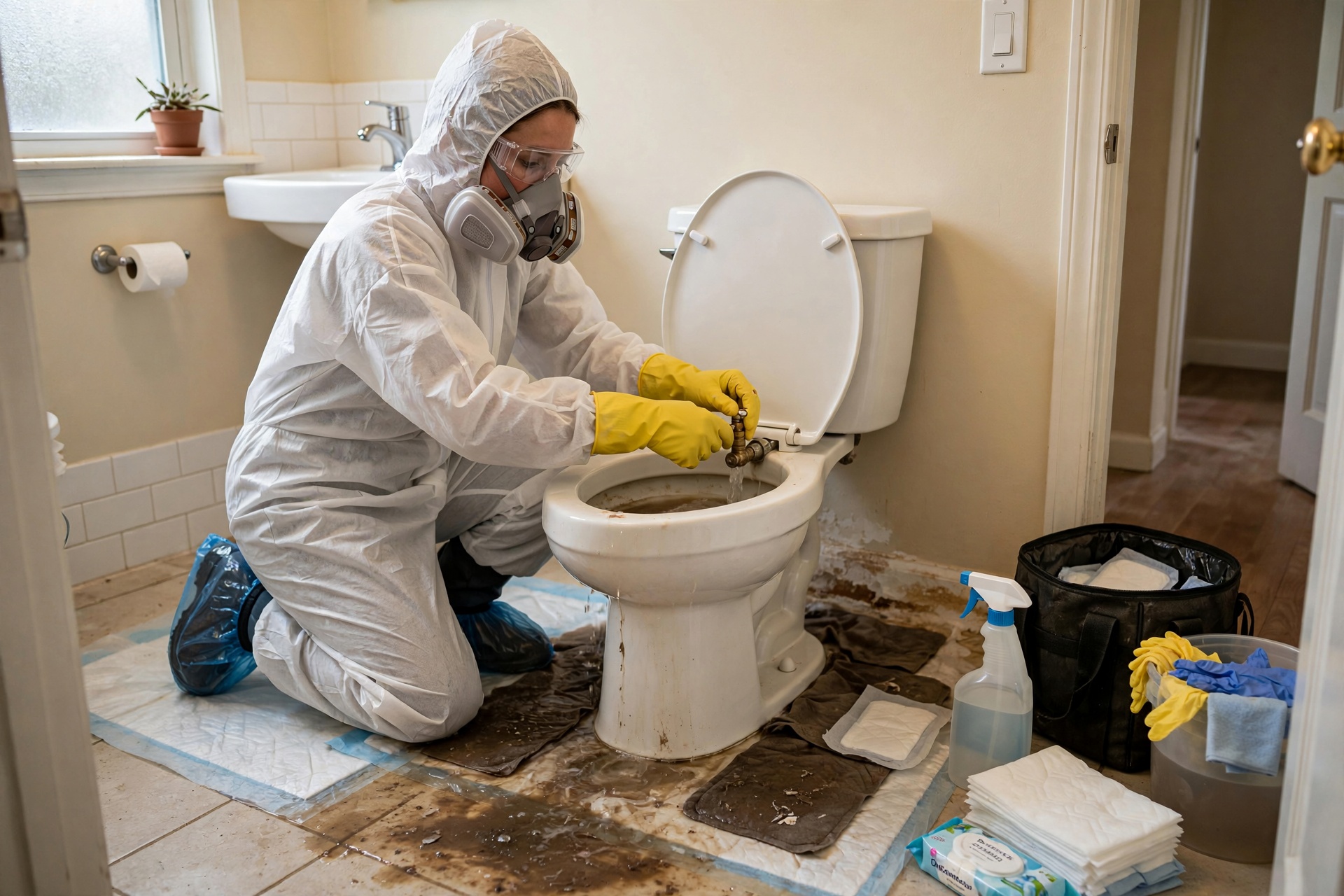
Turn off the water supply at the valve behind the toilet right away and keep all people and pets out of the affected room to limit exposure to contaminated water. In Rosenberg, where many homes in Downtown Rosenberg and Rosenberg Heights date back decades, aging pipes increase the chance of sudden backups that mix with household waste. Hot humid summers speed bacterial growth on wet surfaces, so delays raise the risk of deeper contamination into subfloors near the Brazos River Park area. Contact a local team experienced with Fort Bend County conditions before attempting any removal yourself.
Immediate Safety Steps
Block the area with towels or plastic sheeting at doorways to keep wastewater from tracking into hallways or adjacent rooms. Wear waterproof boots, gloves, and an N95 mask if you must enter briefly to shut off valves, but exit quickly. Mild winters in Rosenberg do not reduce the hazard; the water still carries pathogens regardless of outdoor temperature. If the overflow reaches carpet or drywall in older Rosenberg Heights properties, stop and call specialists instead of using household fans that can aerosolize particles. Document the scene with photos for insurance while staying outside the contaminated zone.
Assessing the Contamination Risk
Toilet overflow qualifies as black water when it contains feces or sewage, requiring full containment and disposal rather than simple mopping. Check whether the backup stems from a clogged trap or a main line issue common in Fort Bend neighborhoods where tree roots invade older sewer lines. Water that reaches baseboards or travels under cabinets in Downtown Rosenberg homes can wick upward and affect hidden cavities. Nearby Richmond and Sugar Land properties face similar soil conditions that hold moisture longer after heavy rain, extending drying times. Never rely on visual inspection alone; hidden saturation often appears days later when odors emerge.
Cleaning and Disinfection Process
Remove standing water with extraction equipment rated for Category 3 waste, then apply EPA-registered disinfectants to all contacted surfaces. In humid Fort Bend summers, allow extra time for moisture meters to confirm subfloor dryness before reinstalling finishes. Homes near the Rosenberg Railroad Museum or Fort Bend Museum often feature pier-and-beam construction that traps water under floors, demanding targeted drying. Toilet overflow cleanup follows these same protocols but scales equipment for larger volumes. Structural materials that cannot be fully sanitized must be discarded to prevent regrowth of mold fueled by local humidity.
Preventing Future Overflows
Schedule annual sewer line inspections, especially for properties in Kingdom Heights or near Brazos Town Center where older infrastructure meets new development. Install backflow valves if your home sits in a low-lying section of Rosenberg prone to municipal surges after storms. Replace fill valves and flappers every 8–12 years in homes built before 1990 to reduce sudden failures. The Hidden Dangers of Black Water and Why Professional Cleanup Is Essential explains why even small overflows can affect indoor air quality long after the water is gone. Keep the main cleanout accessible at 5610 Farm-To-Market Rd 2218 for faster response when backups occur.