2026-10-01 · Frank Morales
The Hidden Dangers of Black Water and Why Professional Cleanup Is Essential
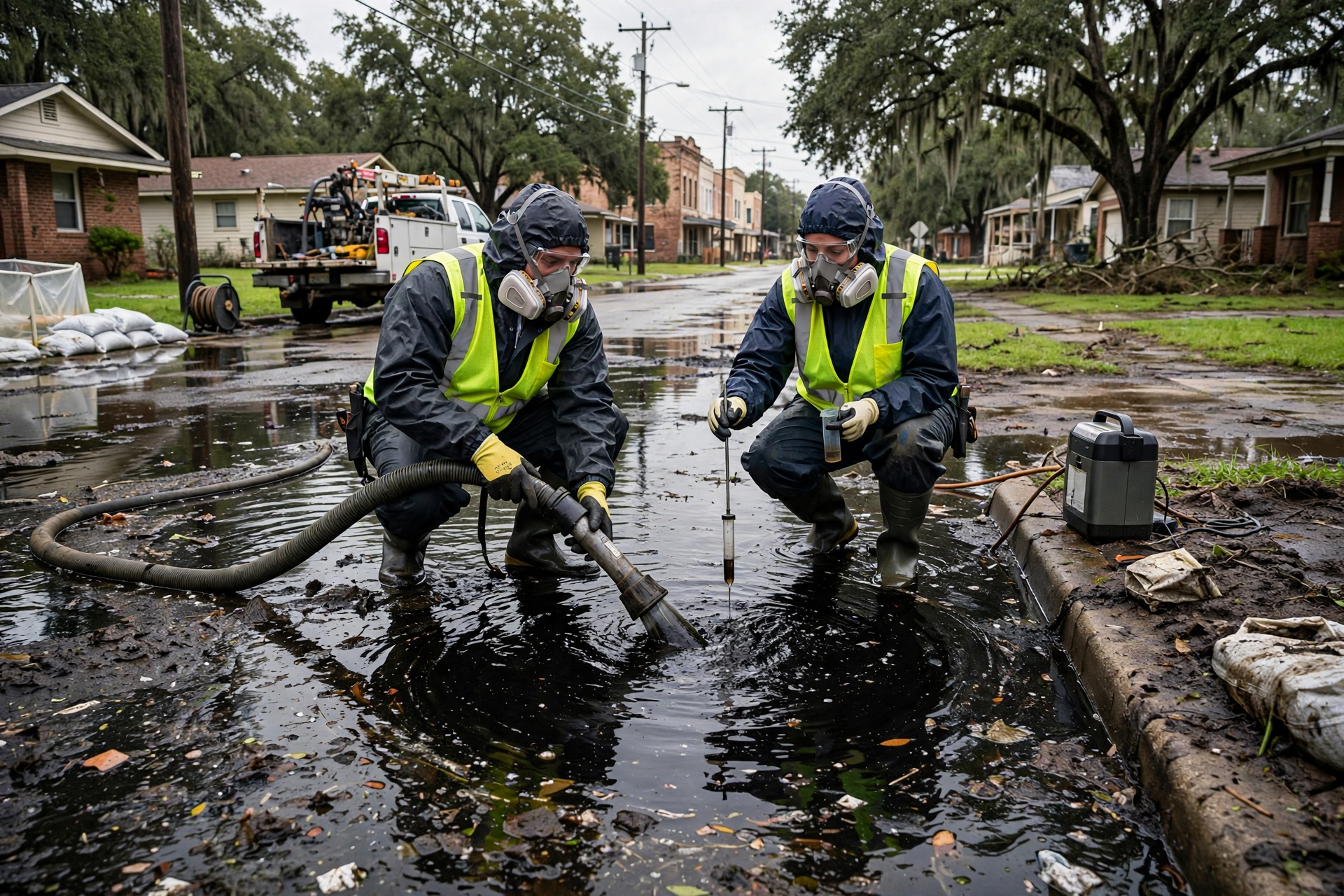
Black water from sewage backups carries concentrated pathogens that can trigger gastrointestinal illness, skin infections, and respiratory problems within 24 hours of exposure, which is why professional cleanup is essential in Rosenberg homes rather than attempting removal yourself.
Local Conditions That Amplify Black Water Risks
Rosenberg sits in Fort Bend County where hot humid summers keep moisture levels high for months at a time. Older housing stock around Downtown Rosenberg and Rosenberg Heights often features crawl spaces and pier-and-beam foundations that trap contaminated water against wood framing. When a sewer line backup occurs near the Brazos River Park or along routes toward Richmond, the mild winters do little to slow bacterial growth, allowing colonies to expand for weeks before visible mold appears on baseboards. Terrain near the Brazos tends to hold water longer after heavy rain, pushing effluent into slab edges and forcing it upward through flooring in neighborhoods like Rosenberg Heights.
Pathogens Found in Regional Sewage Backups
Black water in this area typically contains E. coli, salmonella, hepatitis A, and norovirus from household and municipal lines. These organisms survive longer in the clay-heavy soils common around Sugar Land and Rosenberg because the ground retains moisture. Homeowners near the Rosenberg Railroad Museum or Fort Bend Museum have reported backups that reached living spaces after heavy storms, leaving residue that dries into airborne particles. Without rapid extraction and disinfection, these particles settle into HVAC systems and recirculate for months, turning a single event into ongoing exposure for every resident.
Why Containment and Drying Demand Specialized Equipment
Standard shop vacuums and fans cannot separate clean and contaminated air streams or reach moisture trapped inside wall cavities common in Rosenberg's 1960s and 1970s construction. Professional crews use negative-air machines and moisture meters to map saturation behind drywall and under subfloors before any demolition begins. In humid summers, even small amounts of residual water can raise indoor relative humidity above 60 percent, creating conditions for secondary mold growth within 48 hours. Black water cleanup protocols include sealing off affected rooms and routing exhaust away from occupied spaces to prevent cross-contamination into unaffected areas of the home.
Long-Term Property Damage When Cleanup Is Delayed
Untreated black water seeps into base plates and subflooring, causing structural rot that shows up years later as sagging floors or musty odors. In Fort Bend County homes, the combination of high summer humidity and mild winters means materials never fully dry on their own. Residue left in carpet padding or behind cabinets continues to off-gas, affecting indoor air quality long after the initial spill. Complete disinfection and sanitization after wastewater disasters addresses these hidden pockets by documenting moisture levels at every stage until readings return to normal.
Steps Professionals Follow on Rosenberg Jobs
Crews begin with a site assessment that identifies the source, whether a main line failure or septic issue, then establish containment barriers. They extract standing water, remove porous materials that cannot be salvaged, and apply EPA-registered disinfectants to all hard surfaces. Air movers and dehumidifiers run continuously while technicians monitor readings until the structure reaches safe moisture content. Final clearance includes odor checks and verification that no bacterial film remains on surfaces. Homeowners in areas such as Downtown Rosenberg benefit when teams document every step for insurance purposes and coordinate with local health guidelines.
When to Call for Help After a Backup
Any sewage backup that reaches living areas, affects more than one room, or occurs in a home with children or elderly residents requires immediate professional response. Delaying even 12 hours allows pathogens to migrate into adjacent drywall and insulation. Residents near 5610 Farm-To-Market Rd 2218 can reach the team directly for assessment after hours or on weekends when municipal lines are most likely to fail during storms.