2026-10-01 · Frank Morales
The Critical Role of Structural Drying in Sewage Damage Remediation
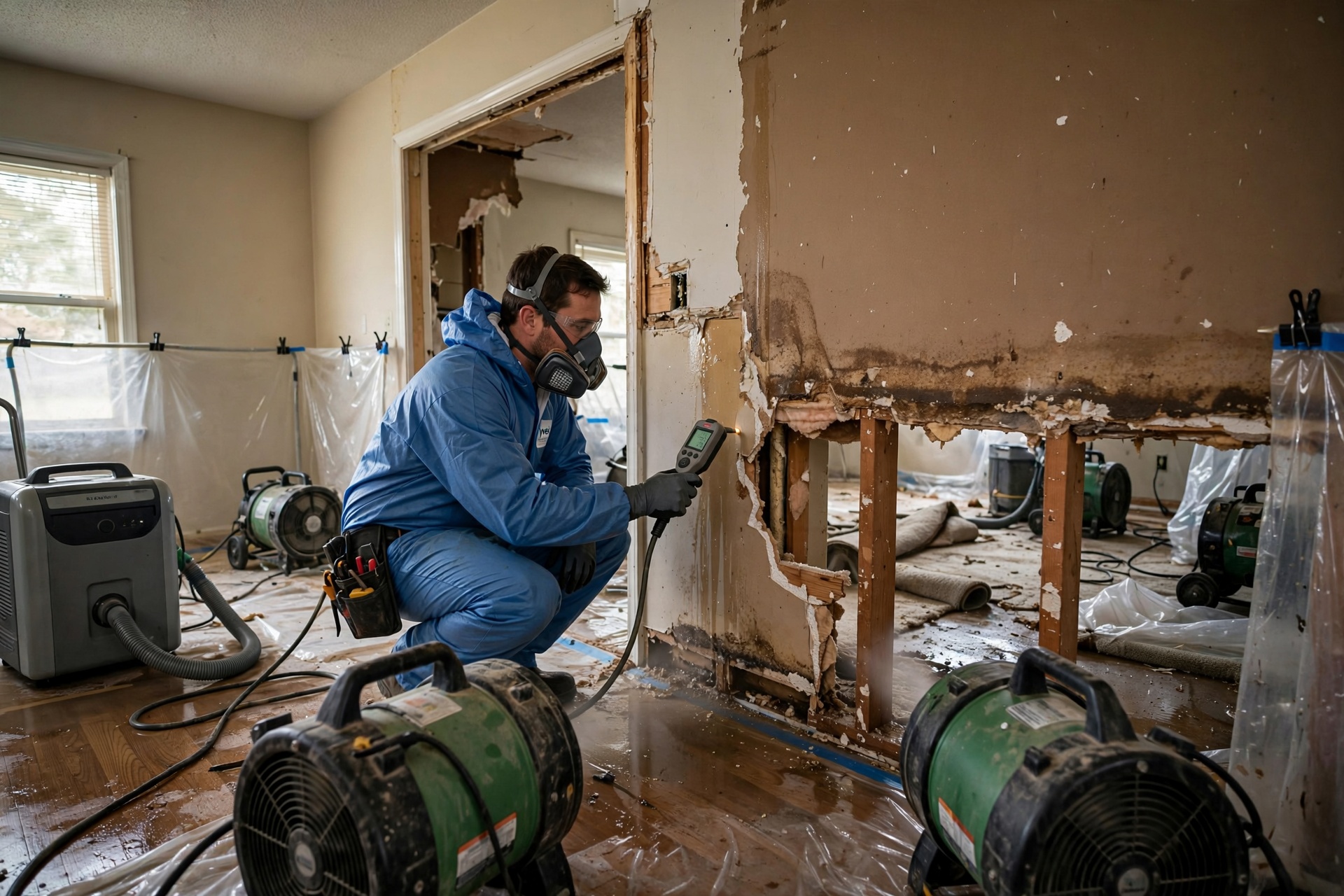
Structural drying must begin within 24 to 48 hours after sewage removal to keep moisture below 16 percent in wood and drywall, preventing mold colonies from forming in Fort Bend County homes. In Rosenberg, where hot humid summers push relative humidity above 80 percent for weeks, trapped moisture in wall cavities and subfloors turns into long-term rot far faster than in drier climates. Crews from Rosenberg Sewage Cleanup Co, based at 5610 Farm-To-Market Rd 2218, track moisture with meters at multiple depths rather than relying on surface readings alone.
Impact of Local Climate on Drying Timelines
Hot humid summers in Rosenberg keep ambient air saturated, so moisture pulled from sewage-soaked materials lingers unless dehumidifiers run continuously. Mild winters offer better natural drying windows, yet sudden cold fronts can still trap vapor inside insulated walls of older Downtown Rosenberg homes built before 1980. Technicians adjust equipment daily because a 10-degree swing in outdoor temperature can add two to three days to the drying cycle when humidity stays elevated. Without these adjustments, hidden pockets of moisture remain and later cause musty odors that travel through Rosenberg Heights properties.
Construction Details That Change Drying Strategy
Many homes near the Rosenberg Railroad Museum and Fort Bend Museum feature pier-and-beam foundations with crawl spaces that trap water after sewer line backups. These voids require targeted air movers aimed under floors rather than standard upright placement used in slab homes common near Sugar Land. Brick veneer walls in Rosenberg Heights absorb and release moisture slowly, demanding longer drying periods than the newer vinyl-sided houses in nearby Richmond. Crews map each structure first to avoid pushing wet air into unaffected rooms.
Equipment Choices for Fort Bend Sewage Jobs
High-grain refrigerant dehumidifiers paired with air scrubbers rated at 500 cubic feet per minute handle the heavy moisture load typical after sewage backup cleanup in this region. Desiccant units supplement when summer dew points exceed 75 degrees, pulling vapor that standard machines leave behind in subfloor plywood. Technicians place sensors every 10 to 12 feet to confirm moisture drops below 1 percent daily, a step that directly supports later disinfection & sanitization work.
Preventing Secondary Damage in Rosenberg Neighborhoods
Skipping thorough structural drying after a sewage event often leads to warped hardwood floors and stained drywall within six months, especially in the older stock around Brazos River Park. Continuous monitoring catches rising moisture levels caused by groundwater seepage common along the Brazos corridor. When readings stay elevated, crews reopen wall cavities rather than sealing them early. This measured approach protects property values in areas like Kingdom Heights where resale inspections now routinely check for past water intrusion.
When to Call for Professional Structural Drying
Homeowners notice musty smells or soft spots in flooring two to four weeks after initial cleanup if drying was incomplete. Linking to detailed guidance on full restoration, see complete disinfection and sanitization after wastewater disasters. Early intervention with the right equipment keeps repair costs lower and avoids the need for full room gutting that older Fort Bend homes sometimes require.